The land stewardship team at The Bower is pleased to announce that our ANFT-certified forest ecotherapy trail loop will be available for guided groups and self-guided visitors in autumn 2026. Contact us for more information about ecotherapy experiences at The Bower.
We invite you to celebrate the opening of our ecotherapy trails with us this autumn, when we’ll host The Life Forest Midnight Market at The Bower, right at our new trailhead. Learn more about this magical moonlit event and reserve your free ticket.
Photo tour of our Ecotherapy Trail Loop
General trail conditions
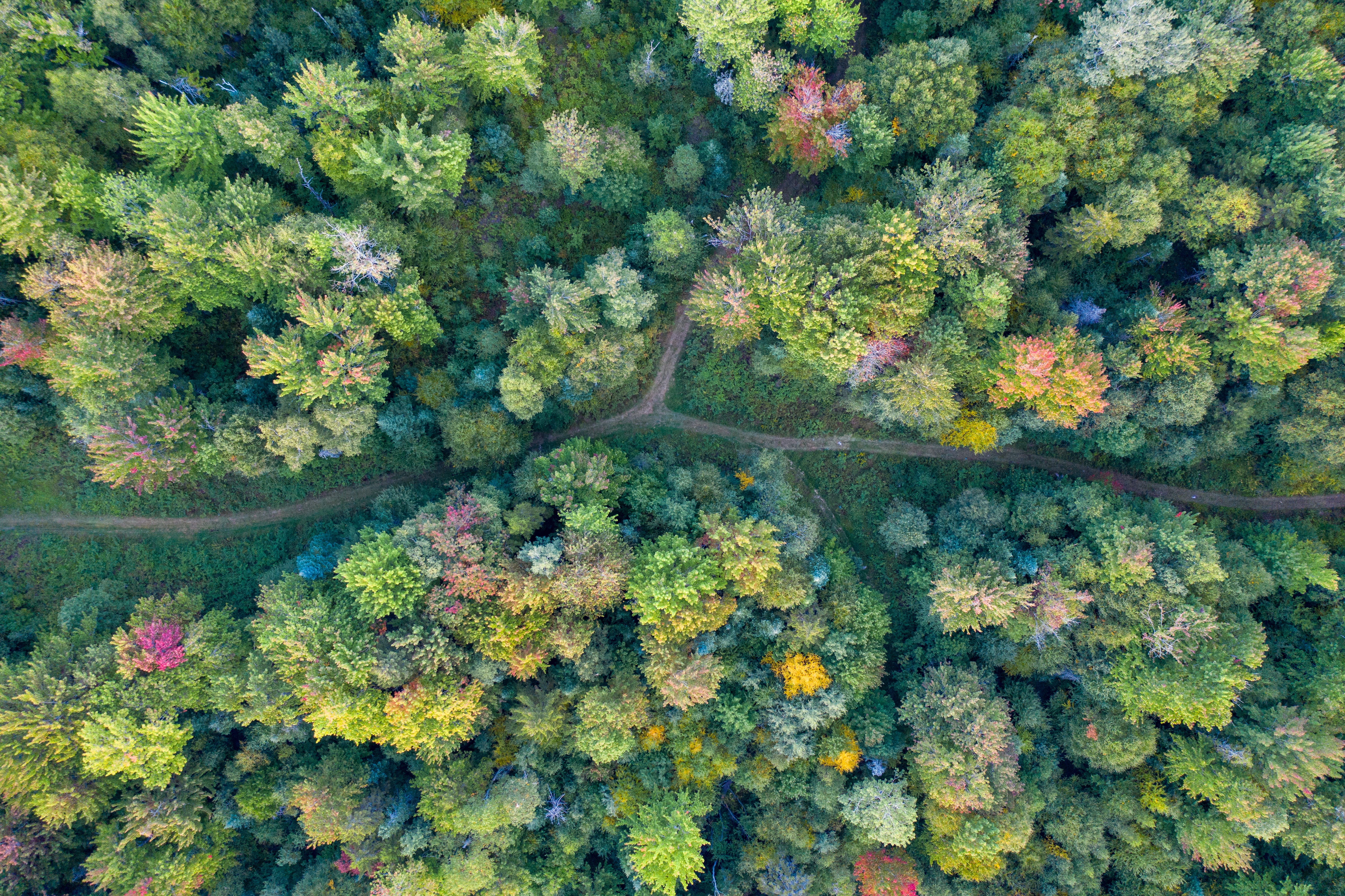
The ecotherapy trail loop at The Bower traverses approximately half a mile (3000 feet) of gently sloping terrain in the central area of the property, starting at an elevation of 1480 feet, descending to 1415 feet, and returning to the start. Three optional out-and-back “pulse” detours from the central trail loop can add an additional 1200, 1350, and 1700 feet to the overall trail length. The trail loop sits in the central portion of The Bower’s larger trail system, which comprises over 10 miles of easy- to moderate-difficulty trails that provide access to many scenic portions of this 900+ acre property.
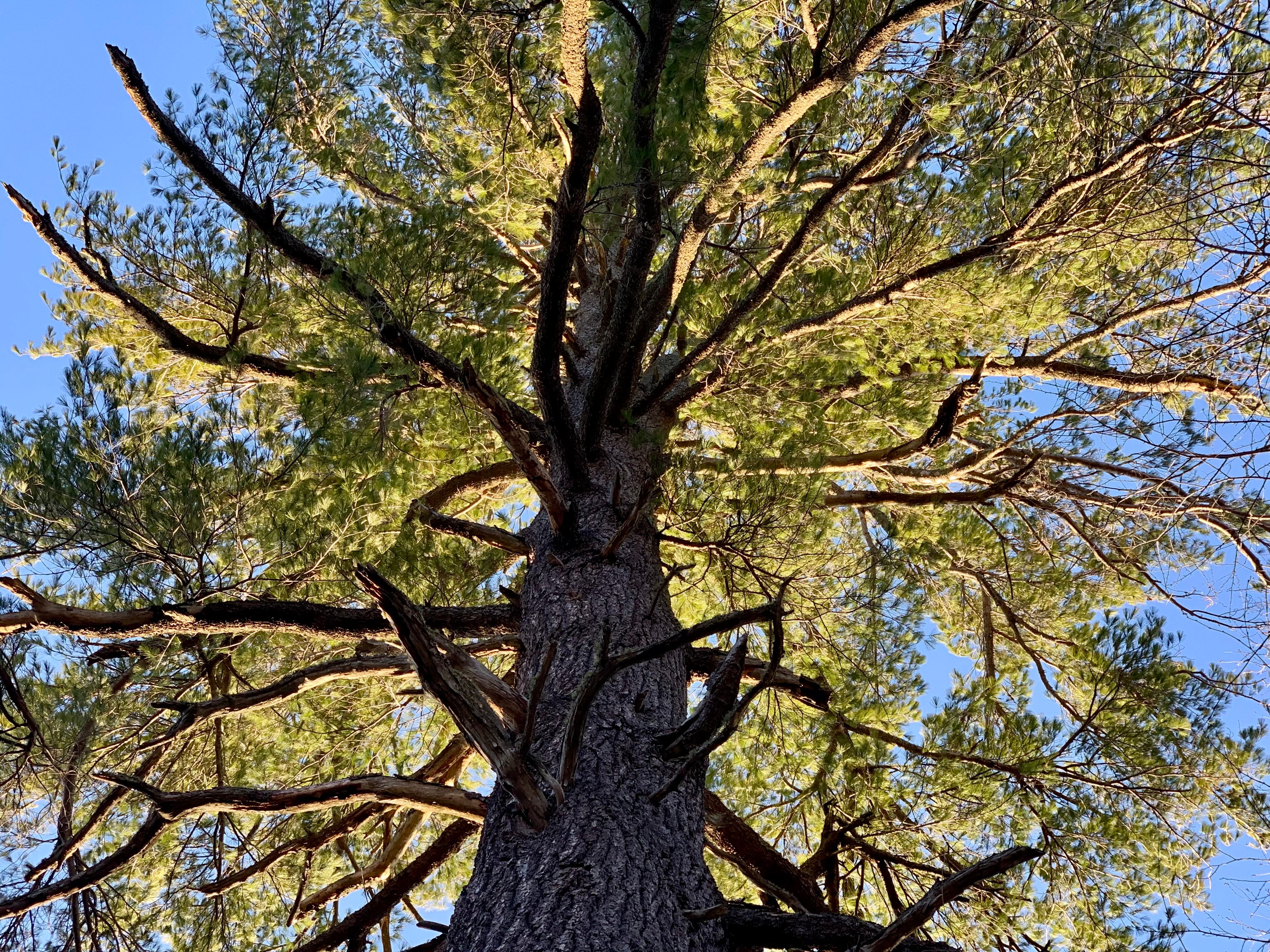
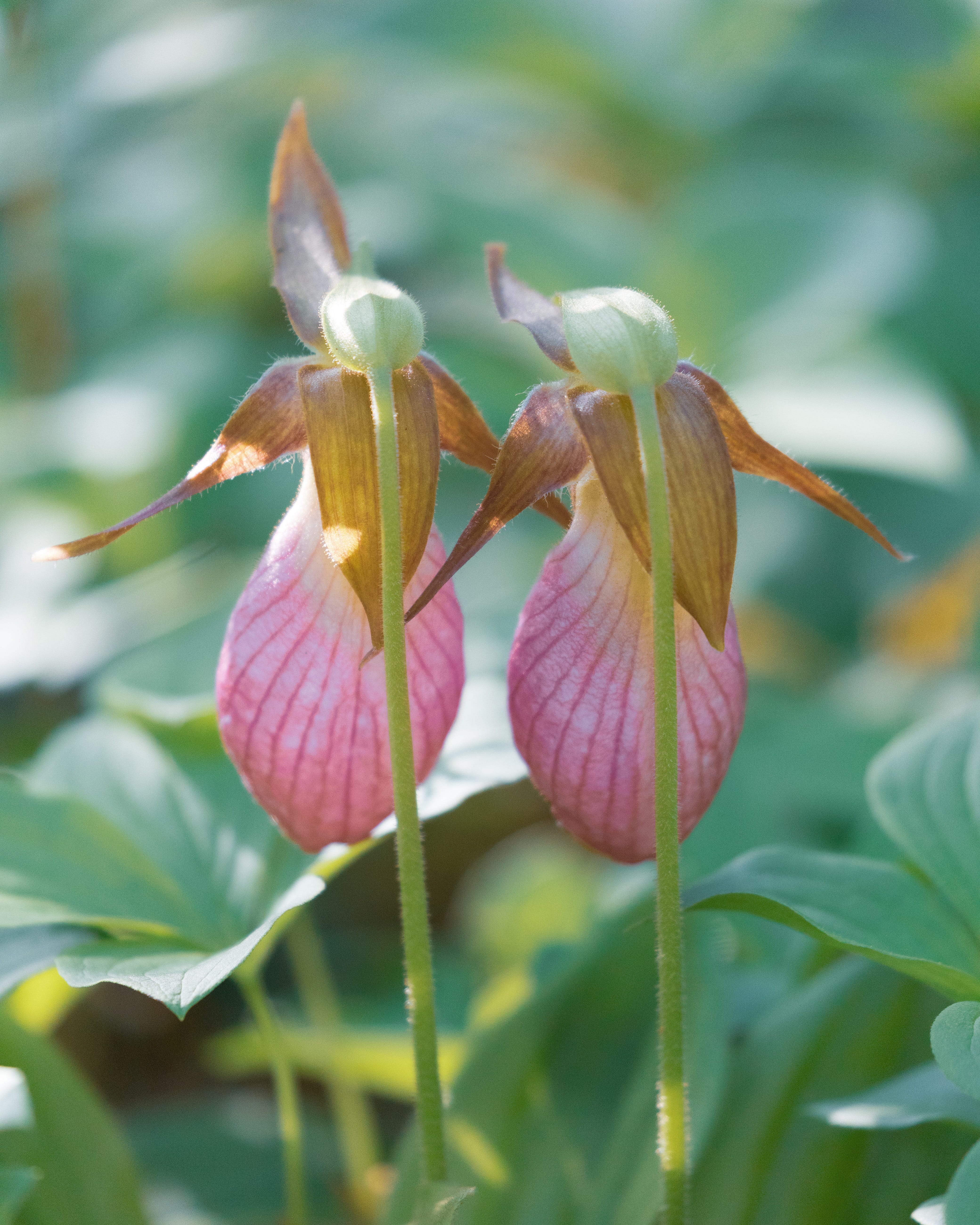
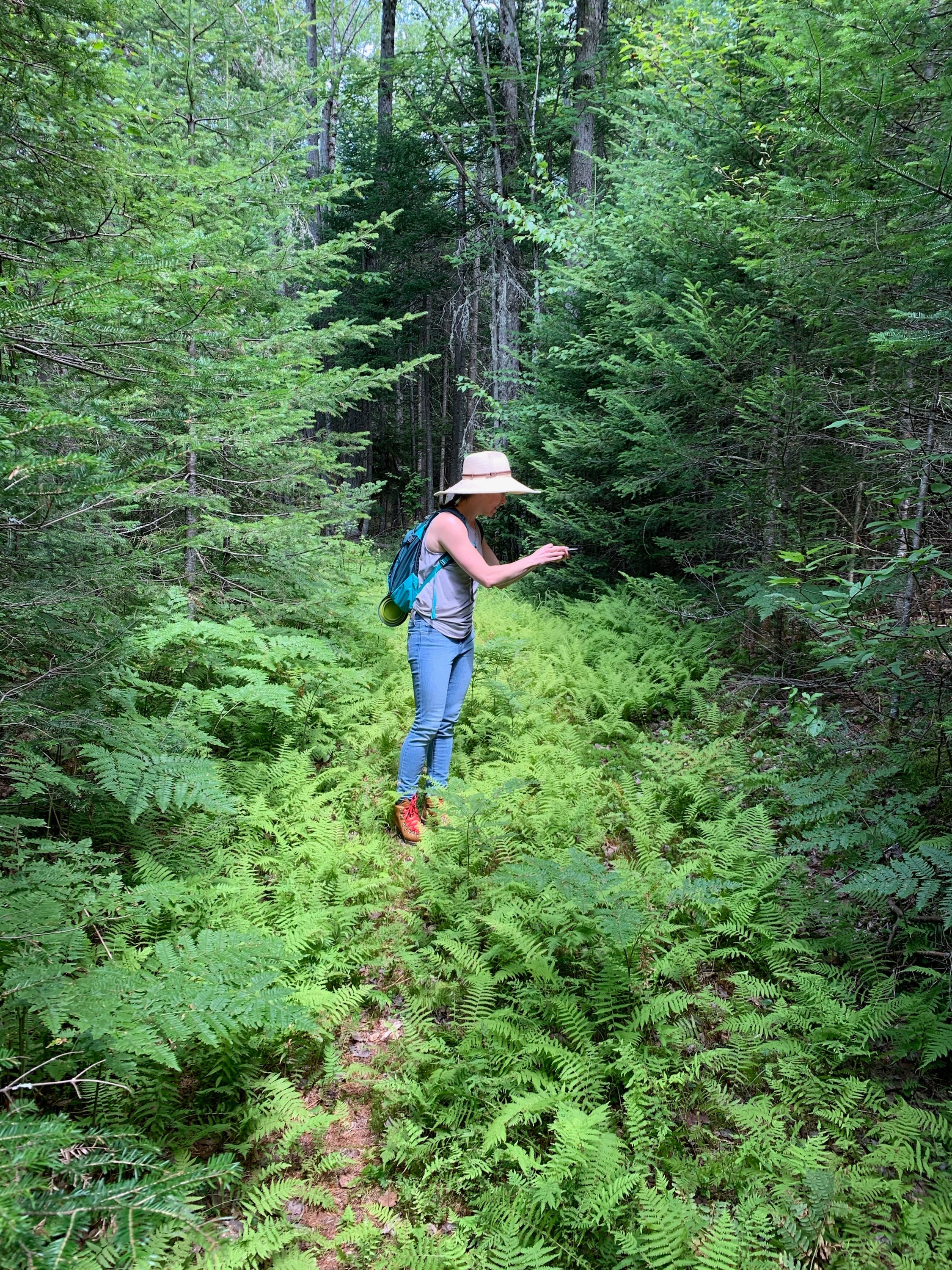
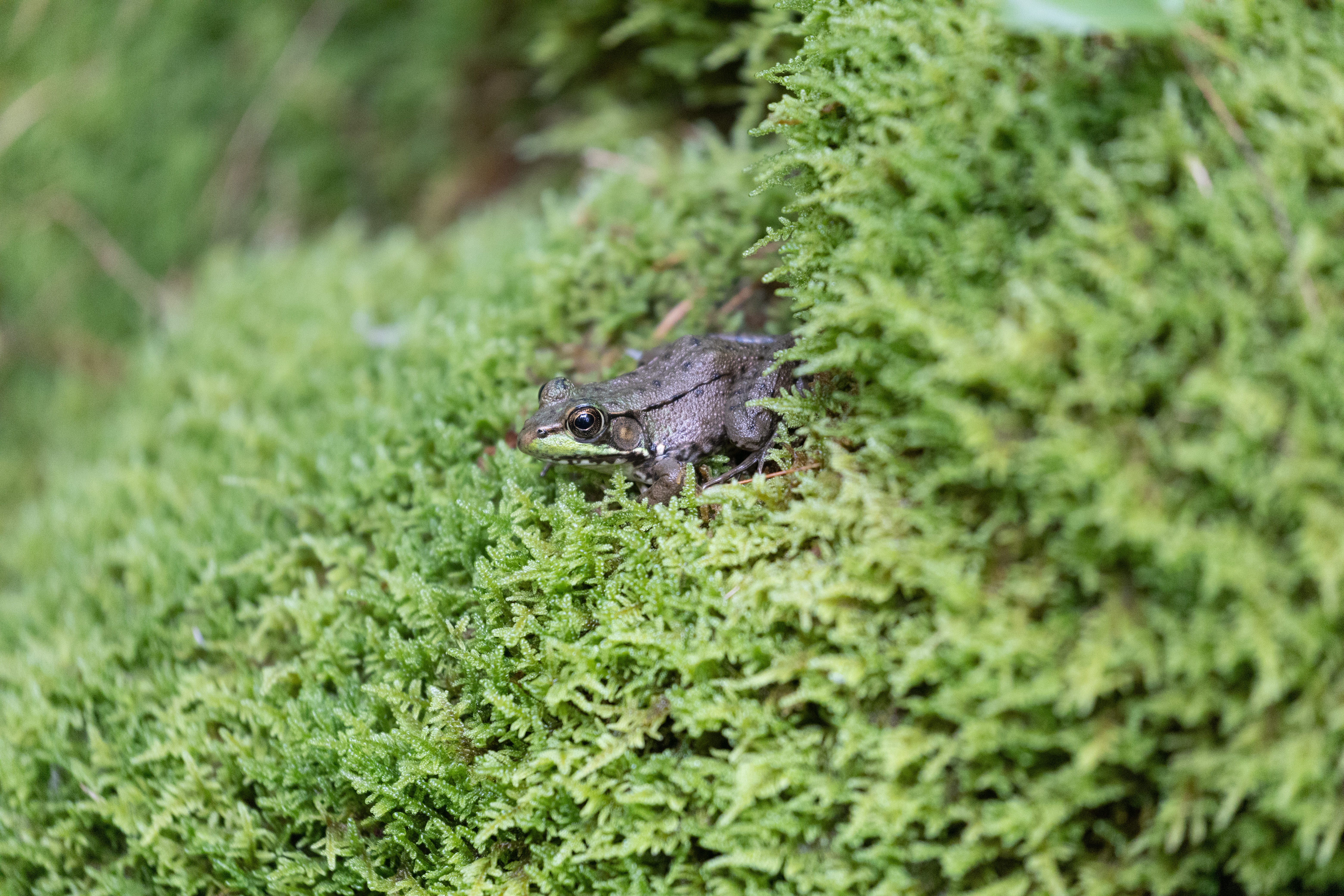
Visitors to the ecotherapy trail loop will experience five distinct landscapes and ecological features that together reflect the full arc of this land’s history. The trail begins at The Bower meadow and proceeds on a level private ledgepack driveway through our Colonnade of white pines; descends gradually on a wide, relatively smooth logging road to our Big Sky Meadow surrounded by a mixed hardwood stand; crosses a mostly level but somewhat uneven (and in wet seasons puddle-dotted) trail section that gives access to the vernal pools and springs of our wetland complex; and returns to the trailhead via a gentle climb on a mossy trail that was once an unpaved county road connecting the hilltop Bower homestead to Main Street Bethlehem. Soils are post-glacial in character—stony loams on the higher ground, wetter and more organic near the low areas—and support a high diversity of native trees, plants, and fungi. The loop travels through a forest-wetland complex comprising prime habitat for black bear, moose, bobcat, snowshoe hare, American marten, ruffed grouse, northern woodcock, and dozens of breeding songbird species. Pink lady slipper orchids and many ephemerals bloom along the trail edges throughout the spring season.
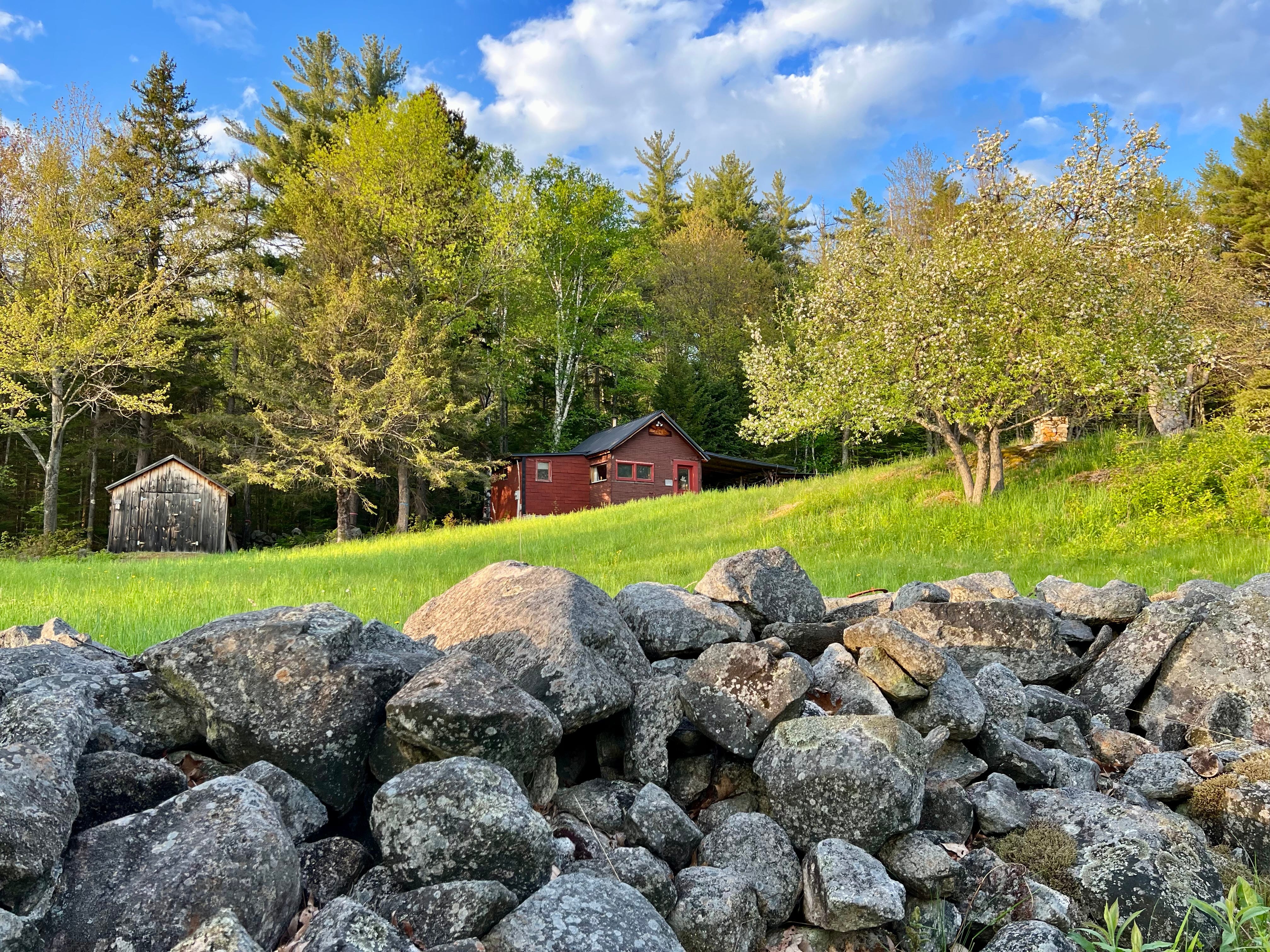
The Bower meadow and cultural landscape
The trail begins and ends in the meadow containing the remains of the original Bower homestead. Hand-laid stone walls enclose the old farm wellyard and apple orchard above The Bower’s foundation—artifacts of the agricultural community that cleared and farmed this land in the 18th and 19th centuries before the forest reclaimed it. The meadow’s diverse grasses and flowering plants support native pollinators. The 1940s-era Camp Jack cabin overlooking the orchard was the beloved home base of the Tellman family, who stewarded the land from 1969 to 2020.
Eastern white pine Colonnade
The trail loop enters the forest through a nine-acre eastern white pine stand notable for both its ecological quality and its sensory character. The pines are of excellent form, the canopy is high and relatively open, and the forest floor is carpeted with needles in a way that muffles sound and softens light. The transition from the cathedral-like simplicity of the white pines into the layered complexity of the mixed hardwood stand is a striking experiential moment.
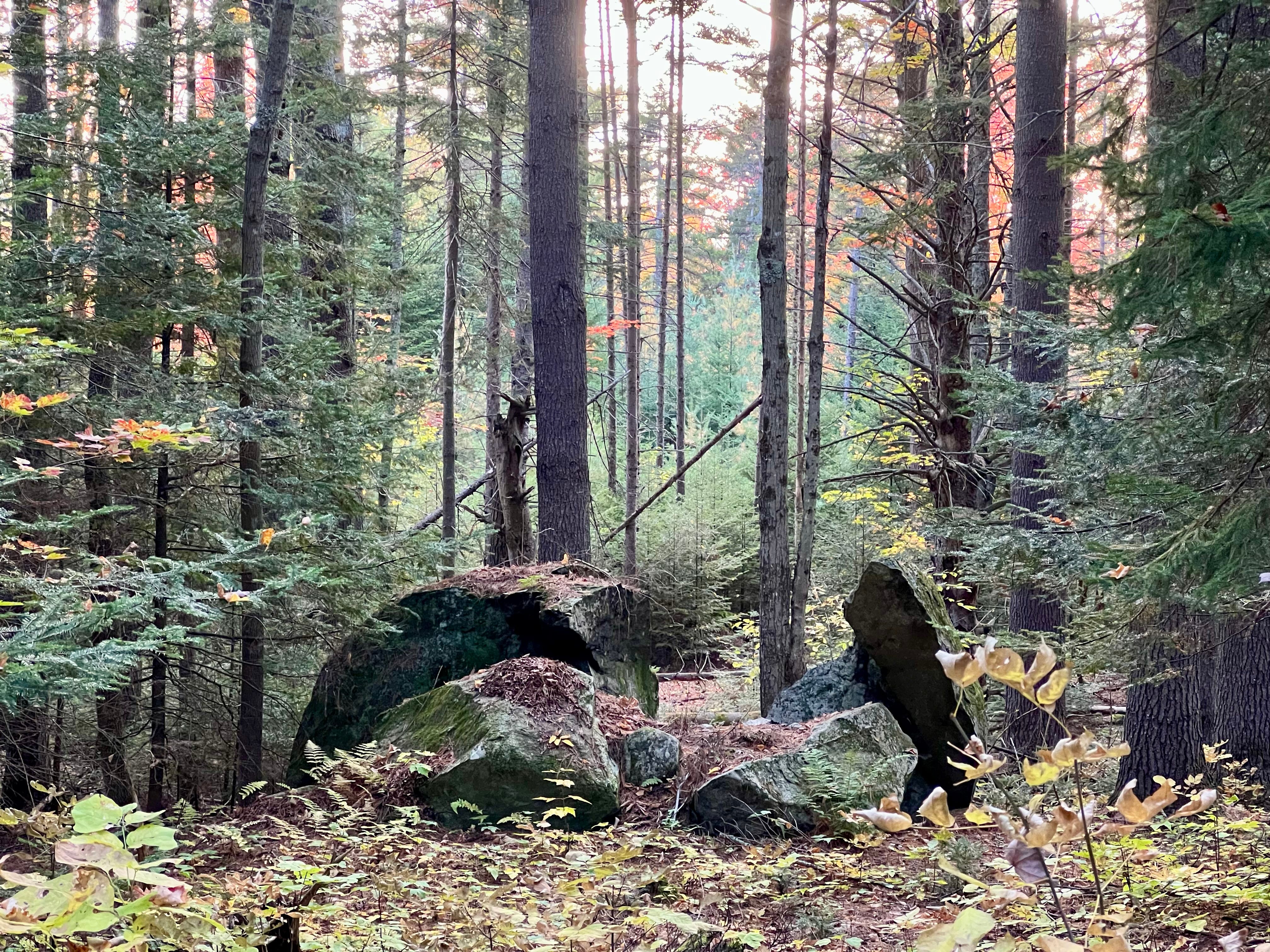
Mixed hardwood-softwood forest with layered canopy
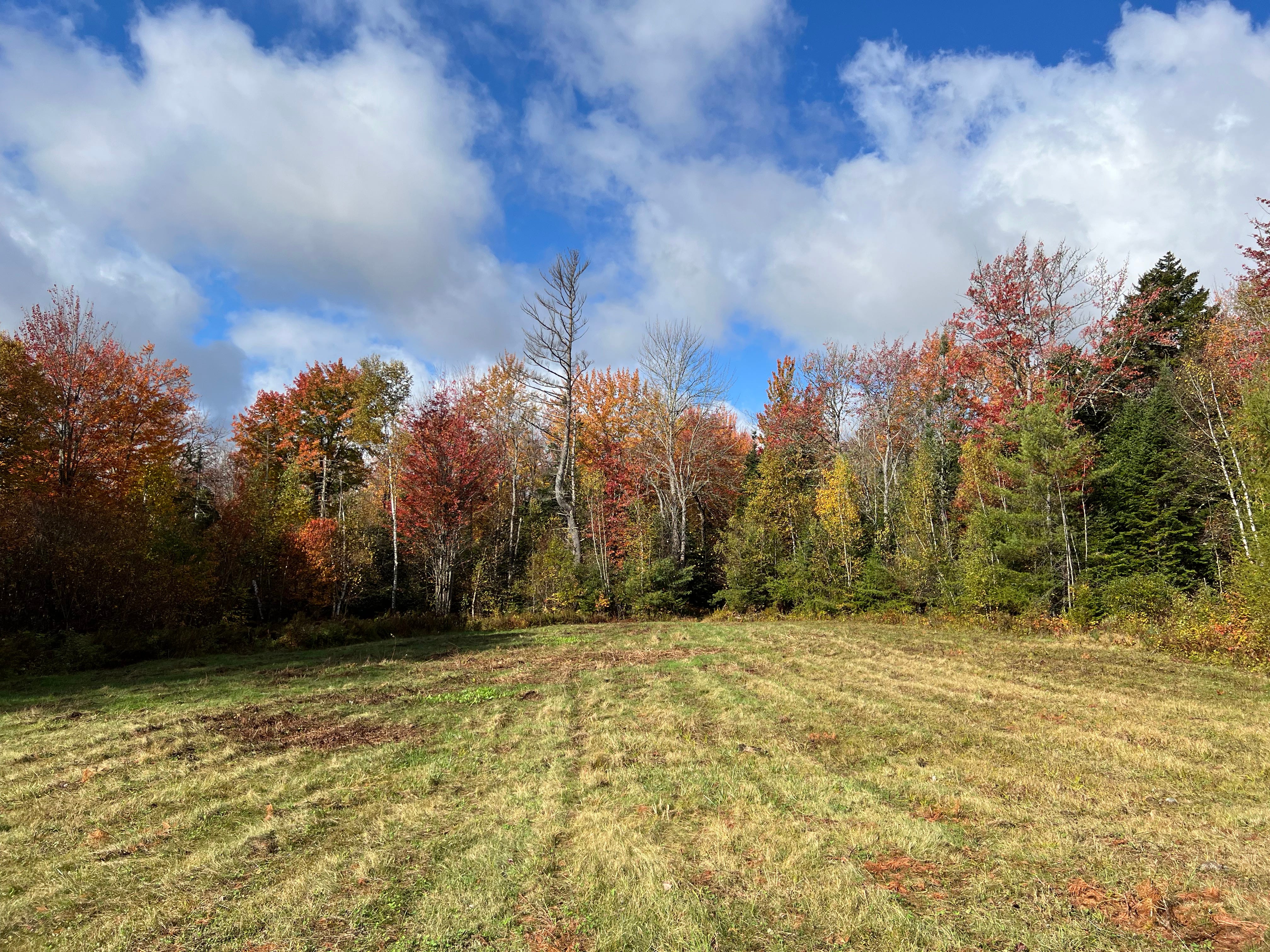
From the Colonnade, the trail enters a 102-acre mixed hardwood and softwood stand. Decades of careful selective harvesting using single-tree and small group selection have produced a structurally complex forest with a layered canopy in this portion of our forest: mature overstory trees, a developing midstory, dense understory pockets, and small light gaps where regeneration is actively occurring. This multi-aged, multi-storied character makes this stand rich in sensory experience—light, sound, and texture change meaningfully with each step. This portion of the trail passes through one of our few forest clearings on the property—the central log yard that supports forestry activities, including patch cuts for wildlife habitat management. In the decades between forestry activities, this log yard becomes our “Big Sky Meadow”—a popular grazing and berry-picking meadow for black bears, deer, and porcupines, and the perfect spot for stargazing in our Bortle 2 dark sky location.
Vernal pools and Heidi’s Spring
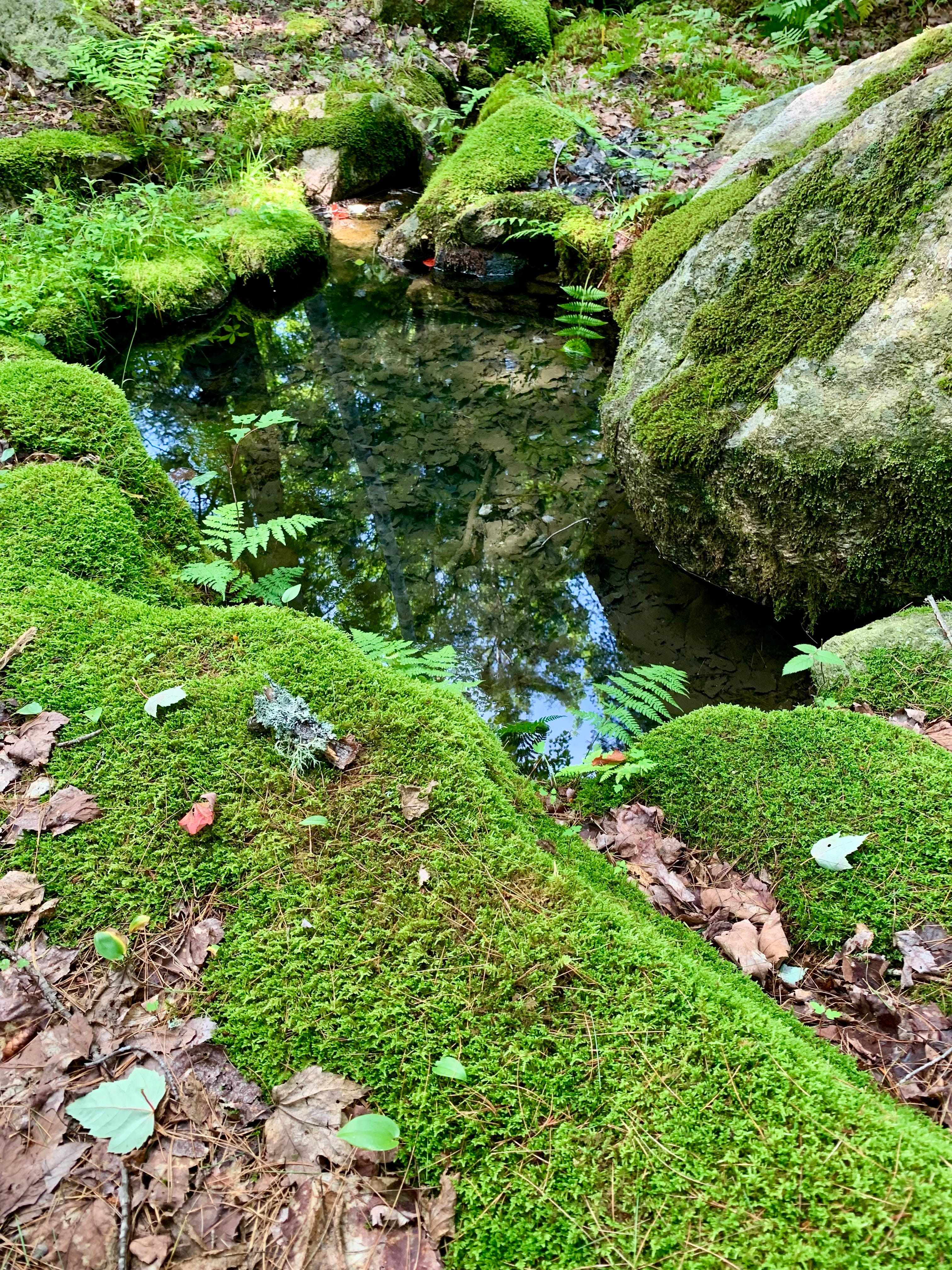
The trail loop gives access to a collection of vernal pools and a natural spring known as Heidi’s Spring, making the forest’s hydrology directly visible and experientially present. The vernal pools—shallow, seasonally-filled depressions that collect snowmelt and rain—are critical breeding habitat for wood frogs, spotted salamanders, and other amphibians. Their cycles of filling, surface activity, and gradual recession through the season offer guides and guests a window into forest hydrology and ecosystems.
Heidi’s Spring—named for the Tellman’s family dog, who revealed the spring’s existence one summer in the 1970s by repeatedly returning to Camp Jack soaking wet—is a groundwater seep emerging at the surface that reflects the complex soil and water dynamics of this part of the property, where the interplay of glacially-deposited soils, seasonal water tables, and topographic low points creates persistent wet microhabitats within an otherwise well-drained forest stand.
Old-growth stand of yellow birch and sugar maple
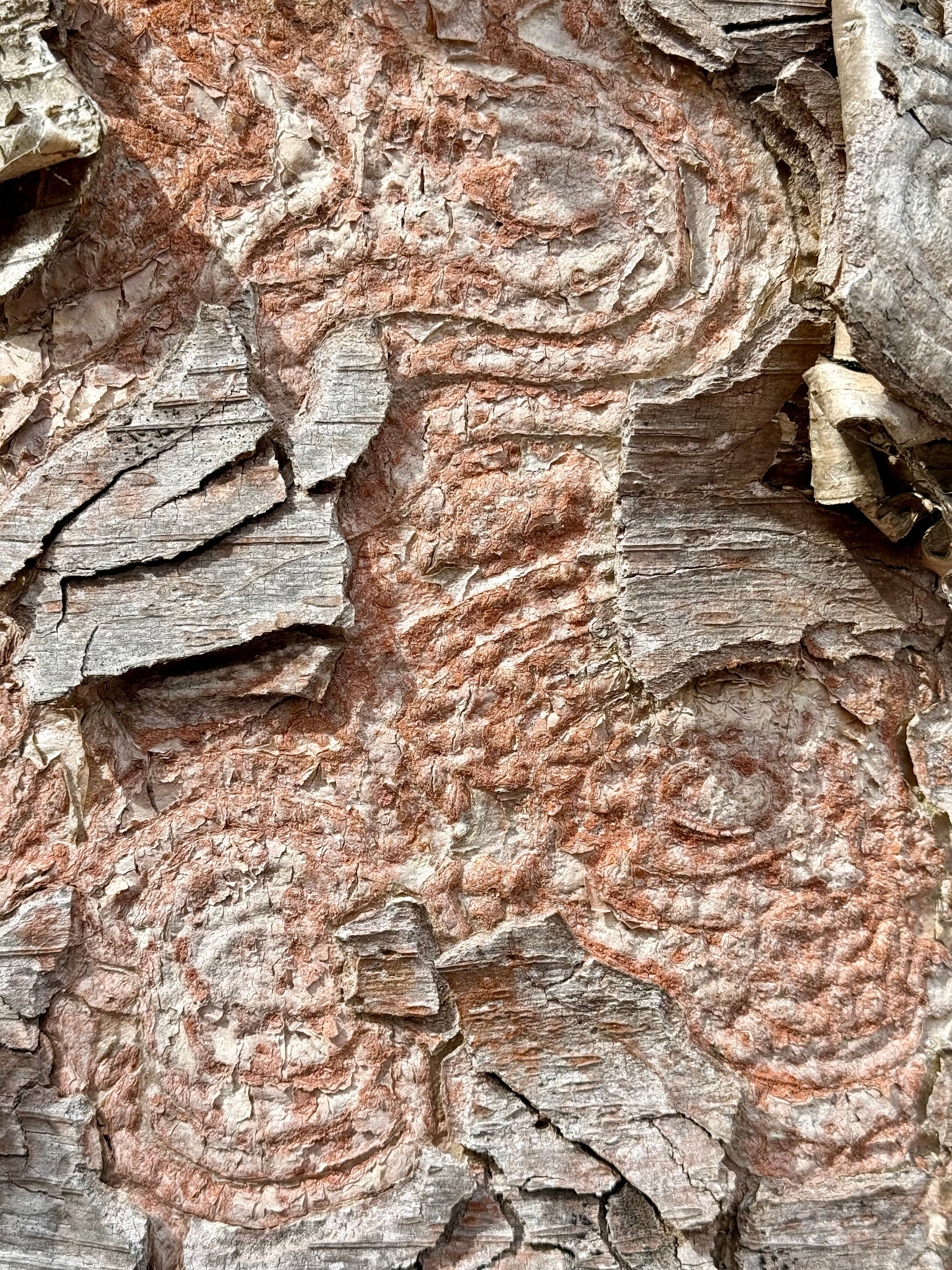
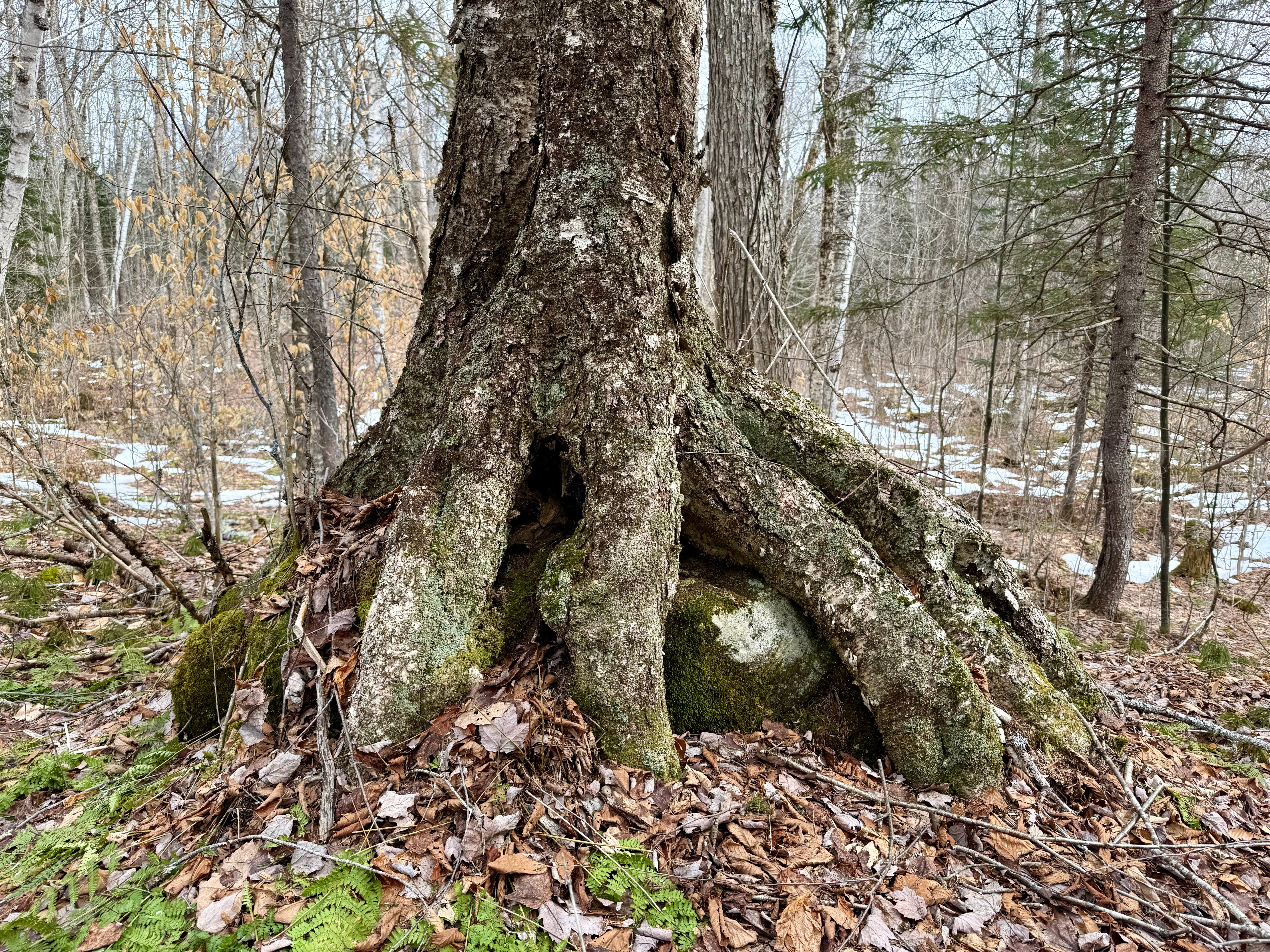
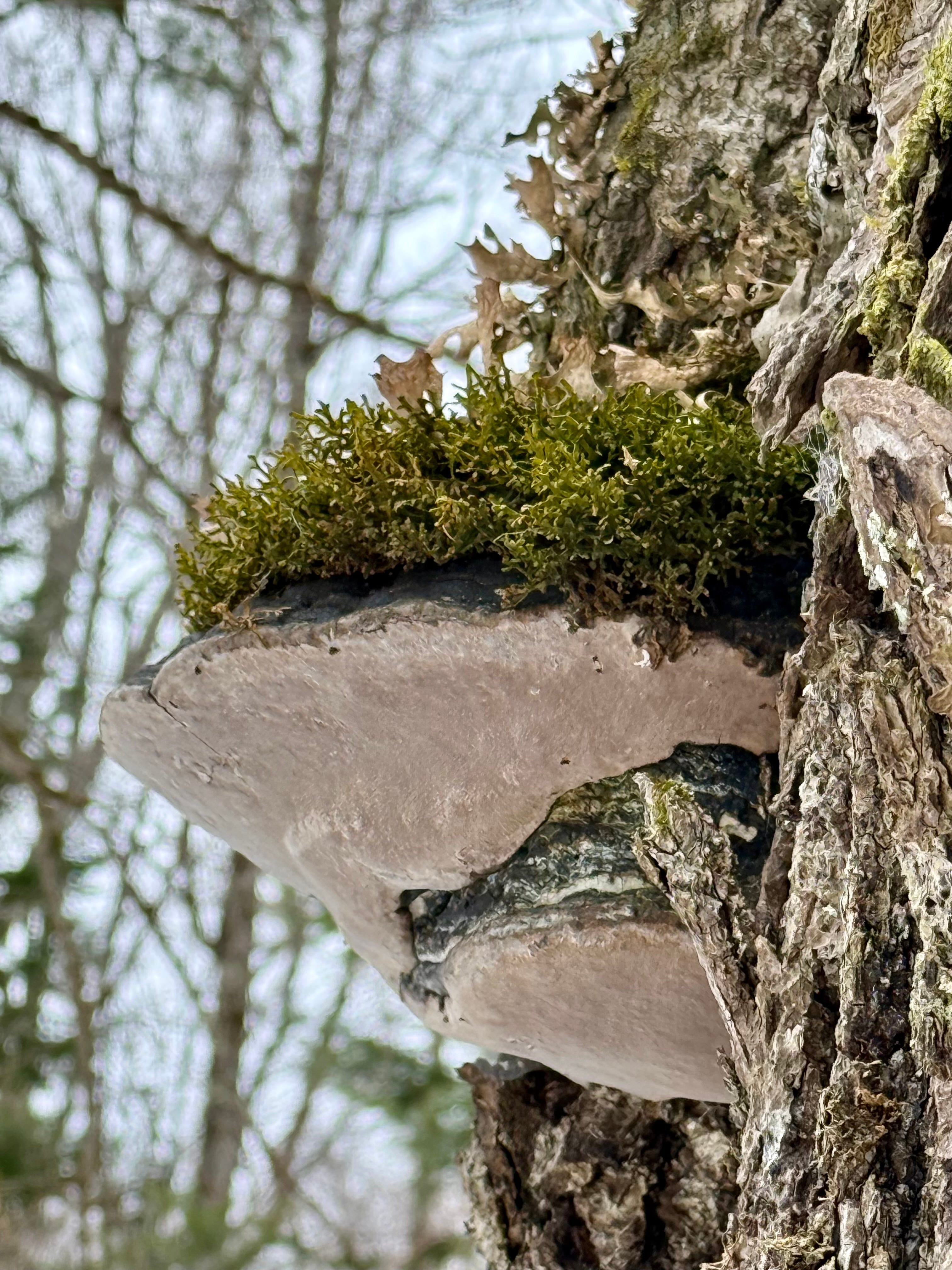
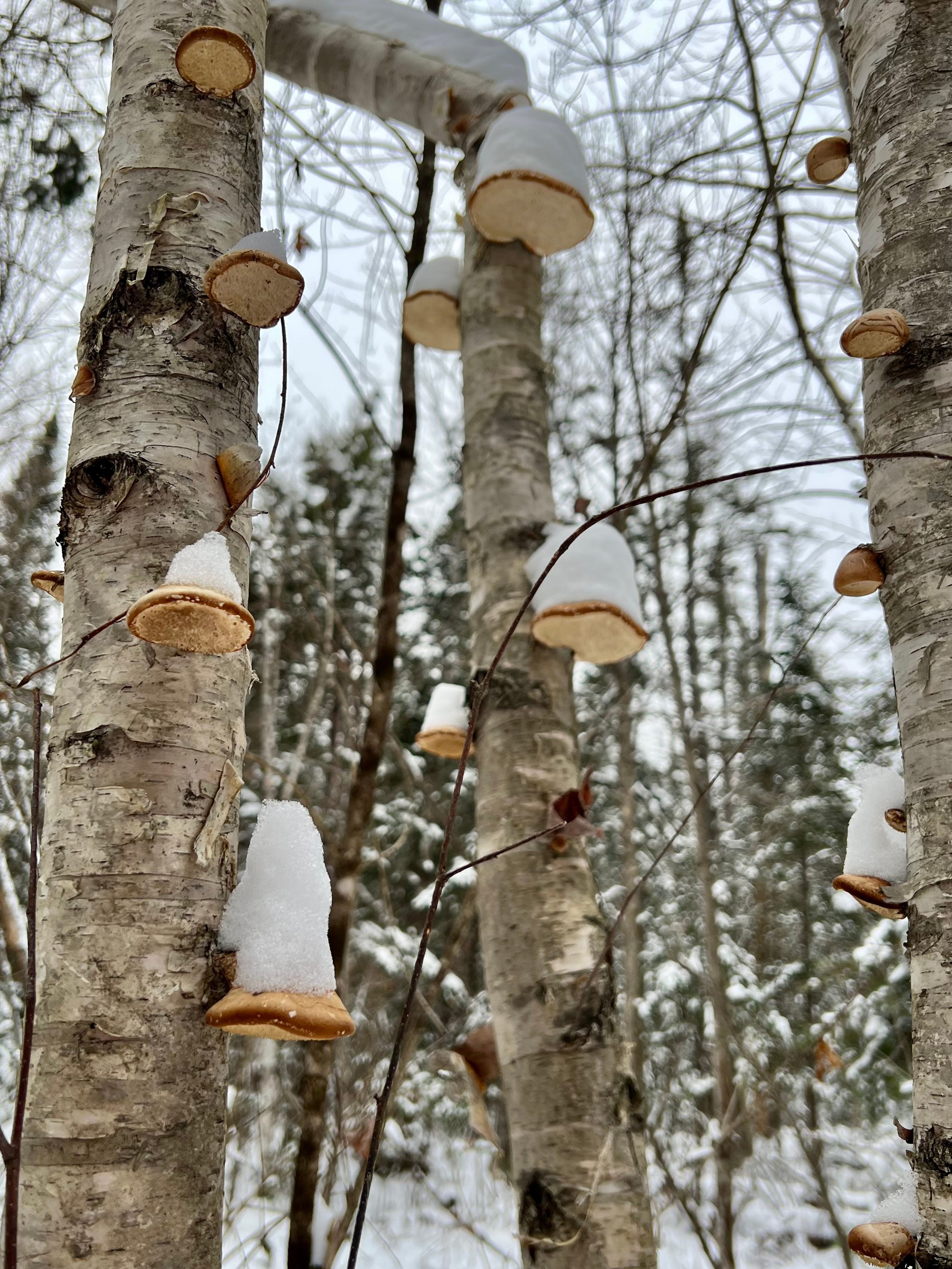
An optional side excursion from the main trail loop gives access to a stunning old-growth stand of yellow birch and sugar maple, and a dramatic Eastern white pine “witness tree” estimated to be over 250 years old. This rare stand is a prime example of a northern hardwood forest at full ecological maturity. Towering sugar maples; downed logs in every state of decomposition; and distinctive standing snags hosting complex communities of fungi, mosses, and lichens are just a sampling of what visitors will see in the old growth stand. The yellow birches that dominate this stand are notably beautiful. In old-growth conditions, yellow birch develops complex plated bark patterns, irregular weathered crowns, and distinctive raised root formations that reveal the shapes of the vanished nurse logs that supported these trees in their seedling phases over a century ago. The stand is strewn with glacial erratics—boulders deposited by retreating ice sheets over 10,000 years ago—which are present throughout this area of the property. The scale, age, and stillness of this stand offer a qualitatively different forest experience from the younger actively managed stands nearby.